The Emotional Cost of Black Organizing in Today’s Political Climate
I’ve been organizing, protesting, and building networks even before my 2019 mayoral appointment. I remember back at Carlow when my roomie (actually my neighbor, but she was in my room enough) Jasmine, asked me to be her vice president for her student government run and I turned my chair around at my desk, smiled, and confidently said, “Noo, I’m not into politics. I’m a writer.”
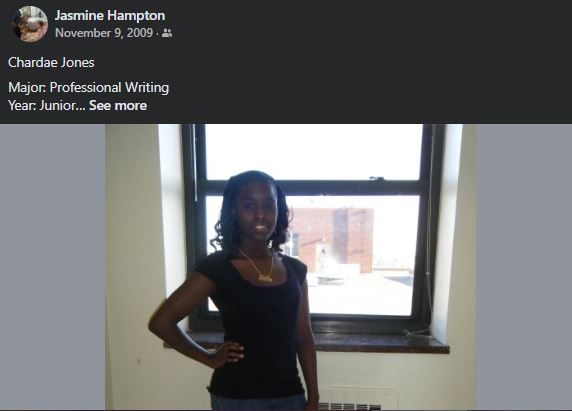
She then responded about how it would be fun, and that’s why we needed to do it. Eventually, she got a yes out of me, as that’s the kind of peer pressure someone’s parent would hope their college student would endure. We sought out underrepresented people on campus and ran on a diversity platform. We lost really badly and got informed that “this was the most racial tension we’ve ever seen on campus.” It turns out that my PWI in 2009-2010 wasn’t ready for diversity. After that, I settled for being a senator of the humanities in the student government, as I really did want to help, even if that meant not being vice president. Even if some folks that I was representing were some of the same students who crumbled up my posters and threw them in the trash in front of me, those behaviors didn’t stop me from fighting for a better quality of food in the cafeteria or questioning the quality of technology and printing services in the monthly newspaper.
“You can’t remove your meal plan if you live on campus,” I remember trying to find a way to avoid paying the ridiculous amount of money for the subpar meal plan at the time. I could’ve left it at that, but instead I decided to stand in the front of the cafeteria a few days a week and hand out my own survey. By the end of that month, people were sliding their completed surveys under my dorm door, and I discovered that a huge percentage of the student body hated the food, which led to the creation of a student committee for food services. That helped change the food for not just the humanities students but everyone. Despite the cries of there being no White Student Union at a PWI, the Black Student Union and Student Government fought against Luke Ravenstahl’s proposed ten percent tuition tax, which didn’t get very far after we crowded the city-county building.

After four years, I graduated and never thought about those events being leadership roles. After getting laid off in 2012, I took the summer of 2013 to refocus, and I joined AmeriCorps in Braddock. I got to help give back to the community that gave so much to me in terms of nurturing and resilience. I’ll never forget advocating for the youth during that summer we had an incident where there was a shooting near the site playground. We wrangled up everyone who was outside, even if they weren’t in the program. We sat around the Nyia Page Community Center quietly decompressing, awaiting people’s guardians to pick them up. A subset of the group sat in chairs that formed a circle, and the older adults (predominantly white) who weren’t from the community insisted that we get the youth to talk about the experience that they had just encountered. They meant no harm, but alarms went off in my 24-year-old head. “We shouldn’t do that. We don’t have the credentials to unpack the trauma that they went through,” I remember arguing. Unpacking trauma for the sake of unpacking trauma creates more trauma and doesn’t help heal a wound. I didn’t make a lot of friends that day, but I wasn’t into making new friends; I was into ensuring that the young adults went home every day and that by the end of the summer, they learned the ins and outs of how to be professional but also enjoy the workplace as that was what was at the core of that program.
AmeriCorps watered something inside of me that I hadn’t known was planted by Carlow. I kept giving. Sometimes I gave for absolutely free. I organized, protested, campaigned, canvased, and networked all funsies, but in today’s times, not anymore. In 2019, I became the Mayor of Braddock at 29. In 2020, the pandemic happened, and I had more than a group of police officers who were determined because the last administration allowed them to run themselves, so I would do the same.

I also had to worry about a lawsuit, racist emails from people who didn’t live in the community, being a part of a community with the lowest vaccine rate (even after I asked for help from the then-Lt. Gov), and then the never-ending fight for police regionalization that had been going on since the 90s. Mind you, the mayor only made and still makes $90 a month, so I had to keep my full-time job on top of all of this. This and the weak-mayor system of it all is why I decided to run for council. I think national politics has been so chaotic that it’s exhausting.
They want people to be exhausted. They want people to protest in the streets, and they’re going to keep coming up with far-fetched oligarchy ideals to keep people exhausted.

92 percent of Black Women voted for Kamala Harris, and 72 percent of Black Men did the same. They got the memo. They knew this was coming. That’s why we’re seeing fewer Black People at these protests, which is also probably why we see fewer police at these protests. If I’ve unpacked anything from these almost 100 days of this administration, it’s that helping everyone sometimes helps no one.
Black people organize really well, really quickly, and we do it with such flair. I don’t blame the 92 percent and the 72 percent of people pouring directly into their communities and picking up hobbies for the first time. History shows that when Black People fought for rights and changes that are being dismantled, we fought for everyone to have them, not just ourselves, because we knew how it felt to be at the bottom. Convincing Black People to march nowadays is hard because it’s not that they don’t care, but it’s actually the opposite. We’ve poured so much into the America we know today that we noticed that our cups were empty and everyone was interested in sipping what we were pouring, but not quenching our thirst for justice. We live in food deserts, we’ve seen poverty firsthand, and we see the broken infrastructure and policies that disproportionately affect us. We knew it could get worse. So I do not blame the American Black Person for not showing up to the protests because we showed up to the polls because we knew what was at stake.
We’ve poured so much into the America we know today that we noticed that our cups were empty and everyone was interested in sipping what we were pouring, but not quenching our thirst for justice.
Discover more from OMG It's Just Daé
Subscribe to get the latest posts sent to your email.
 OMG It's Just Daé