What does it mean to dream? What is your dream? What would it feel like if you woke up and your dream came true? All lighthearted questions, but they all pulled something out of me. Last week, I went to a Dreamers Event, and it was amazing to just be present and sit still. Putting the answers to prompts on paper made things lighter as I painted the words on the paper.
The Dream: I realized I had two main dreams. One is professional and one is a personal dream.
Professionally: The dream is to help build a community rooted in joy, abundance, and thrivability and care, instead of running on scarcity, survival, and fear. For too long, Black Communities have been getting kudos for surviving and being resilient, even though our communities are underfunded, under-resourced, over policed, and over-studied (Someone is always coming to Braddock to study something). A Black person will over-excel with no tools, and people cheer. Someone will underperform, and those same people will say, “That’s just too bad.”
It’s a tale old as time. Even the slave owners got reparations for freeing the slaves. Meanwhile, said slaves got nothing beyond their freedom.
As long as the dream is bound by the boundaries set by the oppressors or people who lack the lived experiences, the dreams will be closer to the ground. The people who fund the dreams in search of a pat on the back via metrics where metrics aren’t useful create this frustrating ecosystem.
Once we fulfill the core dreams of basic comfort and ease the fear of being unhoused, unfed, or unhealthy, we can heal the inner dreamer in everyone. Philanthropic organizations want measurable outcomes when they give to a person or organization, but the person running that organization can’t keep up with the metrics if they’re worried about their next meal or experiencing agonizing tooth pain because they have no insurance. We cannot heal a person if we have not healed the home, because we would just be setting the person who goes home up for failure. We have to build this trust between the communities and the organizations. We also have to always ask for sustainability. Not just from an environmental standpoint but economically, morally, and yes, financially.
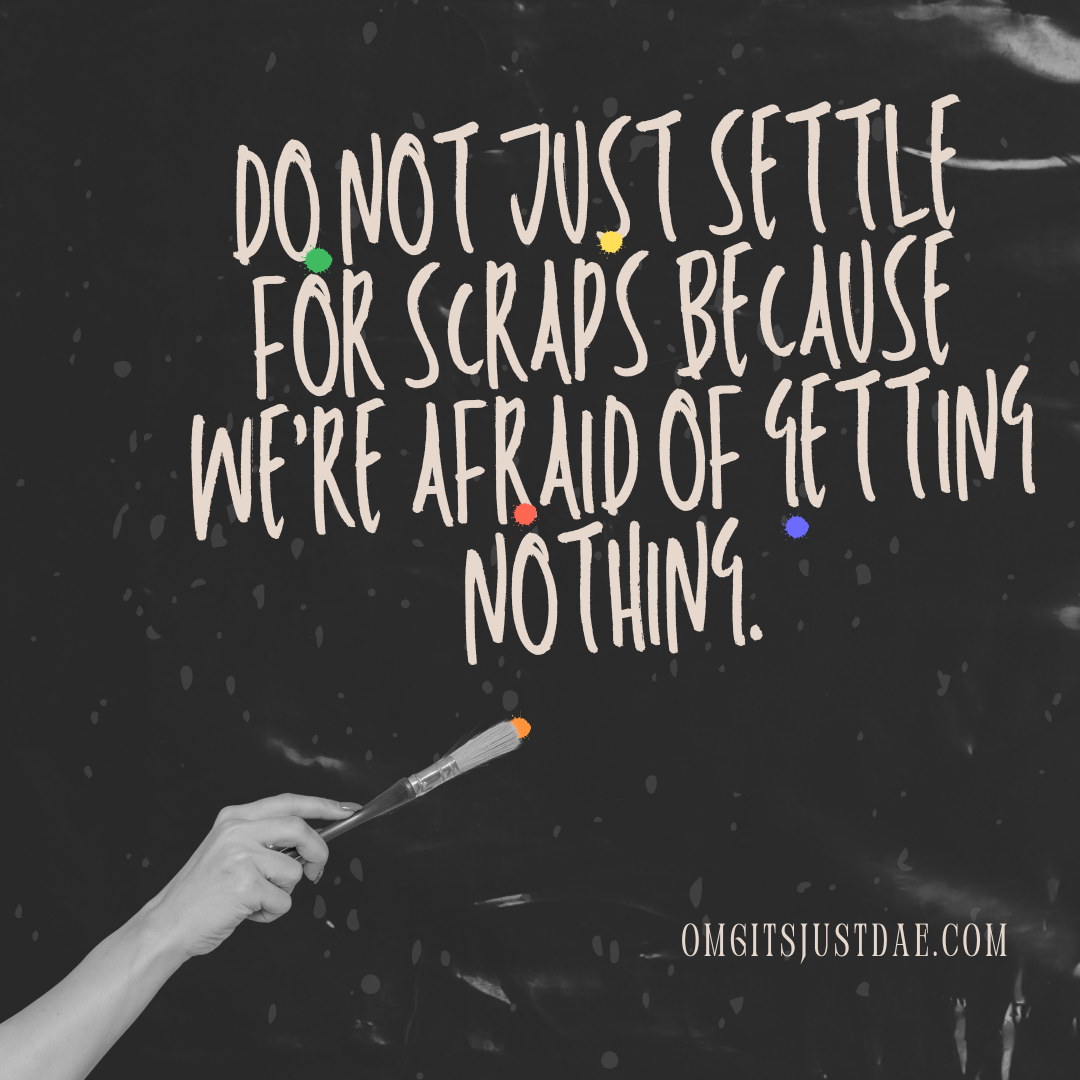
Do not just settle for scraps because we’re afraid of getting nothing.
The lack of resources in our community is intentional because when we do get scraps, we compete and/or fight for them. I’m learning by collaborating with my neighbors. When we all eat and then we believe in each other, it’s contagious, and that solidarity makes it harder for the ask to be denied.
Communities can thrive when they depend on one another in the community. The local gardener, the butcher, the seamstress, the chef, the teacher… The village together is always stronger than the villager trying to go it alone, and that solidarity always scares whoever is in charge of the village, as there is no leader if the followers haven’t agreed to make them a leader.
Discover more from OMG It's Just Daé
Subscribe to get the latest posts sent to your email.
 OMG It's Just Daé